How to Read a Ginseng Label
The ginseng market is large, competitive, and almost undifferentiated at the label level. Two products can look nearly identical on a shelf and contain very different material. Here is how to tell them apart.
Start with origin
Not all Korean ginseng is grown in Korea, and not all ginseng grown in Korea comes from the same region. A label should say where the root was grown, not only where the product was packed.
Historically significant Korean origins include Ganghwa Island, Geumsan and the Goryeo region. They are not interchangeable. Soil composition, altitude and climate all affect the root. A label reading only "Korean ginseng" is telling you where the supply chain ends, not where the quality began.
Check the root age
This is the most commonly omitted figure on a ginseng label, and the most useful one. Ginsenoside concentration rises substantially as the root matures, so a two-year root and a six-year root are different products.
If a brand is using six-year root, they will say so. It is a real cost and a real quality marker. If the label does not specify, it is reasonable to assume it is not six years.
Look for ginsenoside content
A credible product lists ginsenoside percentage, or content in milligrams per serving. Without it you have no way to judge whether the extract is concentrated or dilute.
"Standardised to X percent ginsenosides" is useful. "Total ginsenoside content" in milligrams is useful. "Korean ginseng root extract" with nothing after it is not. The word extract sounds precise, and on its own it tells you nothing.
Understand the processing
Red ginseng is white ginseng root that has been steamed and dried. The process changes the ginsenoside profile and extends shelf stability, which is why most high-quality Korean products use it.
Extraction method matters too. High heat can degrade ginsenosides, while controlled-temperature methods preserve more of them. This is rarely printed on a label, but it is a fair question to put to a brand directly.
Read everything else on the list
Many ginseng supplements carry fillers, binders, artificial flavours and added sugar that have no relationship to the purpose of the product. Read the full list. If ginseng is the fourth or fifth ingredient, it is present in trace amounts.
Formulas that combine ginseng with other herbs are not automatically diluted. Traditional hanbang formulas are built as combinations by design. The question is whether the combination came from a clinical tradition or from a cost sheet.
Ask what is not on the label
United States supplement regulation does not require disclosure of root age, ginsenoside content or growing region. A brand can legally omit all three.
That omission does not prove poor quality. But a brand that cannot answer when asked is telling you how it sources.
What a transparent label looks like
It gives the growing region, the root age, the ginsenoside content, the processing method, and who formulated it. It does not bury ginseng inside a proprietary blend that prevents you working out how much is actually there.
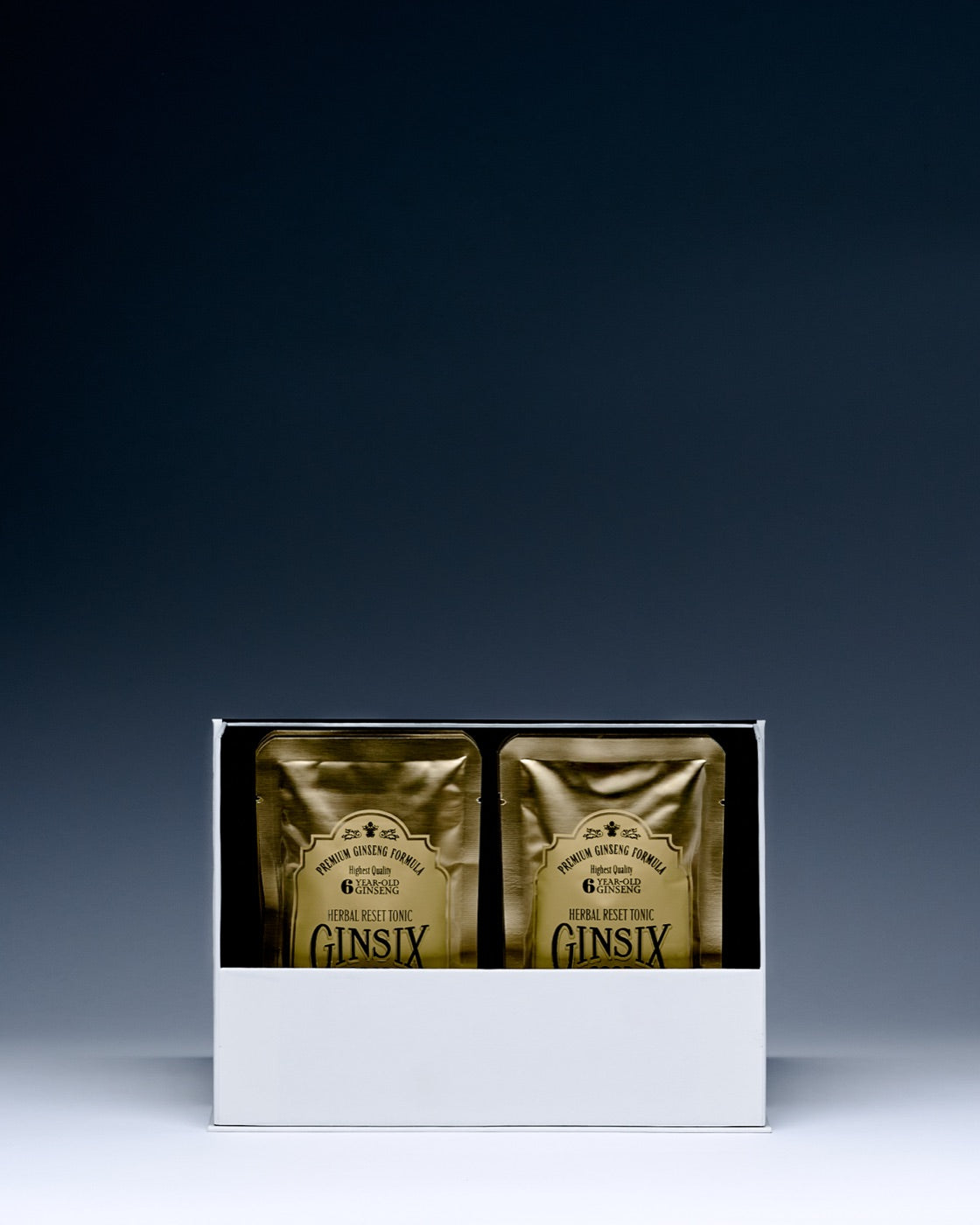
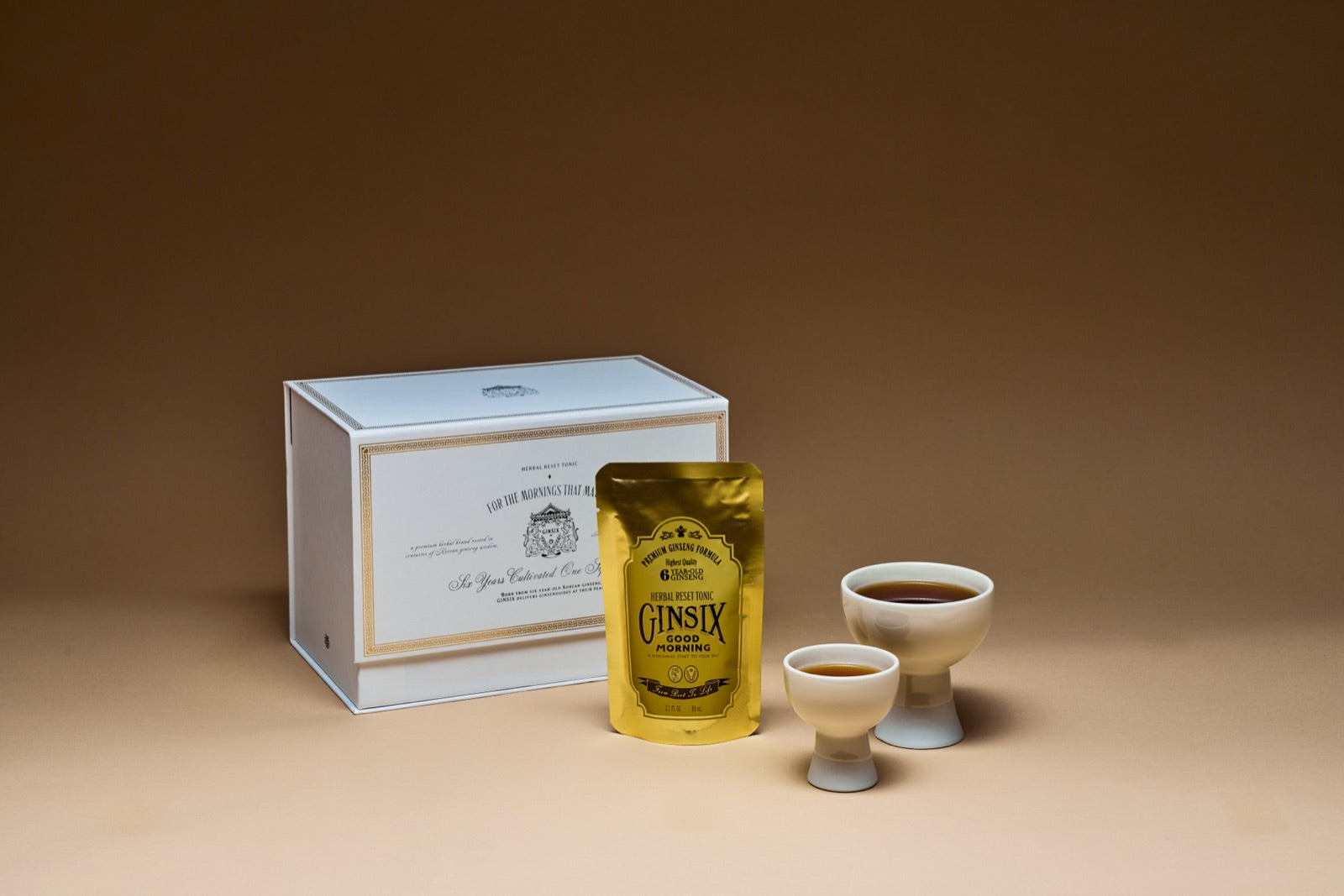
GINSIX Morning Ritual uses six-year Ganghwa Island ginseng, and was formulated by Dr. Chang Sun Chun, who has thirty-nine years of clinical practice behind every sourcing decision. We publish this because you should expect any serious ginseng product to do the same.
GINSIX Morning Ritual is an 80mL Korean herbal tonic, sold in three, six and twelve pack. More on the formulator on the About page.
GINSIX is a herbal tonic, not a medicine. It is not intended to diagnose, treat, cure or prevent any disease. If you are pregnant, nursing, taking prescription medication, or managing a health condition, speak to a clinician before adding any herbal product to your routine.