What Is Hanbang?
The word hanbang turns up more and more often in wellness writing. Most of what carries the label in a Western commercial context has been separated from the system that gives the word meaning. Here is what it actually refers to.
The tradition
Hanbang, written 한방, is the traditional Korean system of medicine derived from classical East Asian medical theory. It draws on the same foundational texts as traditional Chinese medicine, and developed a distinctly Korean clinical identity over centuries of practice and written codification.
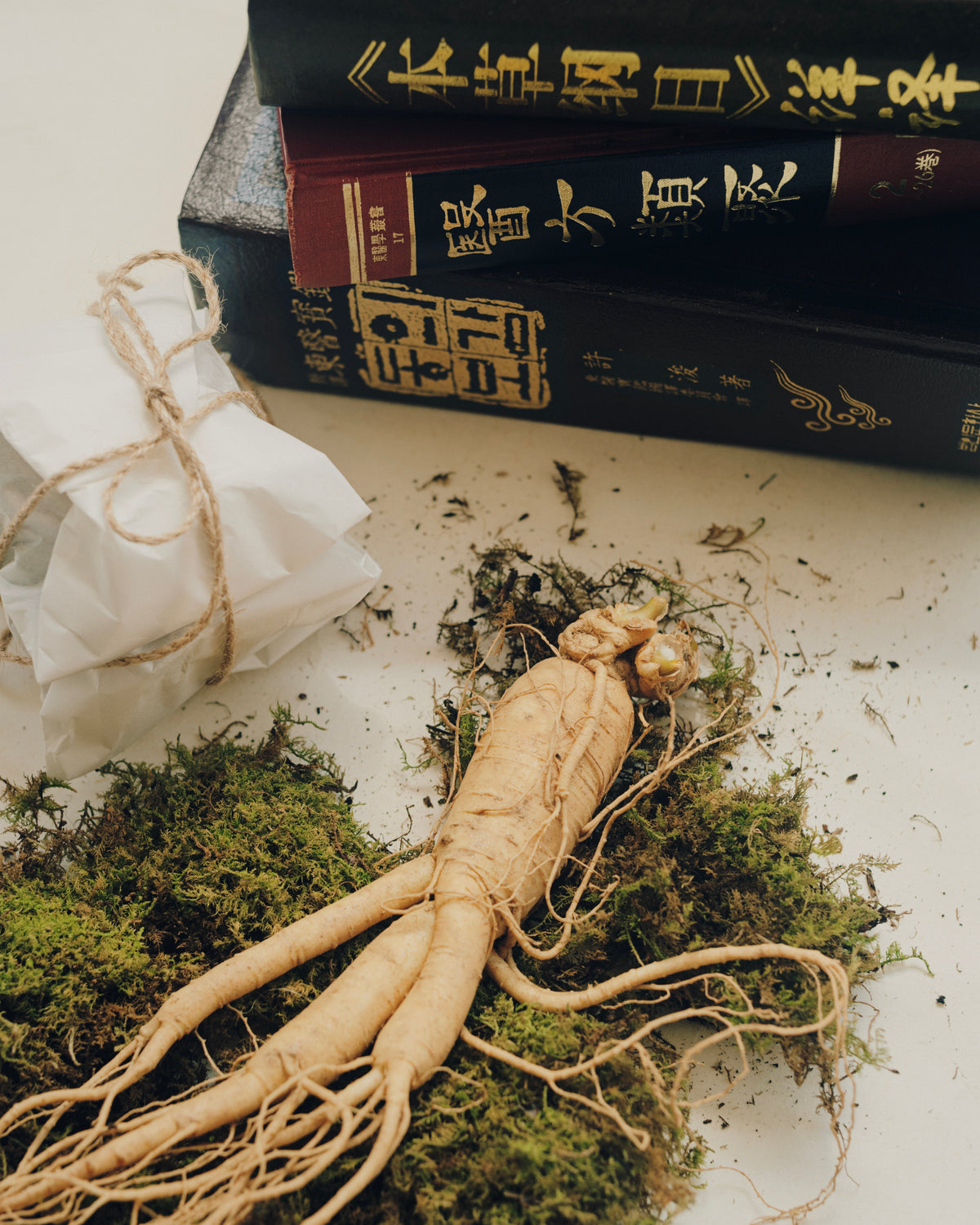
Its most significant text is the Dongui Bogam, a twenty-five volume encyclopedia compiled in 1613 by the royal physician Heo Jun under King Seonjo. It classified diseases, documented treatment protocols, catalogued hundreds of medicinal plants native to Korea, and set out a theory of constitutional medicine, the idea that different body types call for different formulas. It is still a reference for practitioners today.
This is not inherited folklore. It is a written, structured tradition with a documented record that predates most Western medical institutions.
How formulas are built
Herbal formulas in the hanbang tradition are not single-ingredient preparations. They are combinations, each ingredient selected for how it behaves alongside the others. A practitioner adjusts the combination for the individual, the season and the presenting condition.
This is why hanbang training takes years, and why a formula built by a practising clinician looks different from one assembled around a trending ingredient. The knowledge being applied is which root, at what age, in what combination.
It is a licensed clinical profession
Hanbang is practised today by licensed Korean Medicine Doctors, who complete six years of university training followed by clinical residency. In Korea, traditional and Western medicine operate as parallel systems inside the same national healthcare framework. A patient can see an internal medicine specialist and a Korean Medicine Doctor in the same hospital.
Dr. Chun completed that training and founded YakSan Clinic in 1987. Across thirty-nine years he has treated more than fifty thousand patients. He went on to found TT Joint Clinic, and Omniherb, the herbal sourcing company that supplies GINSIX its raw material. He received the Sejong Book Award for his written work.
Why the distinction matters
Wellness culture has created a market for old traditions, and most of what reaches Western shelves has been simplified to the point of distortion. An ingredient is extracted, rebranded, and sold on its own, away from the system that gave it context.
Ginseng without that context is a root. Hanbang is the body of knowledge that says which root, at what age, in what combination.
GINSIX is not borrowing that tradition as a story. It was built by someone who has practised inside it for four decades.
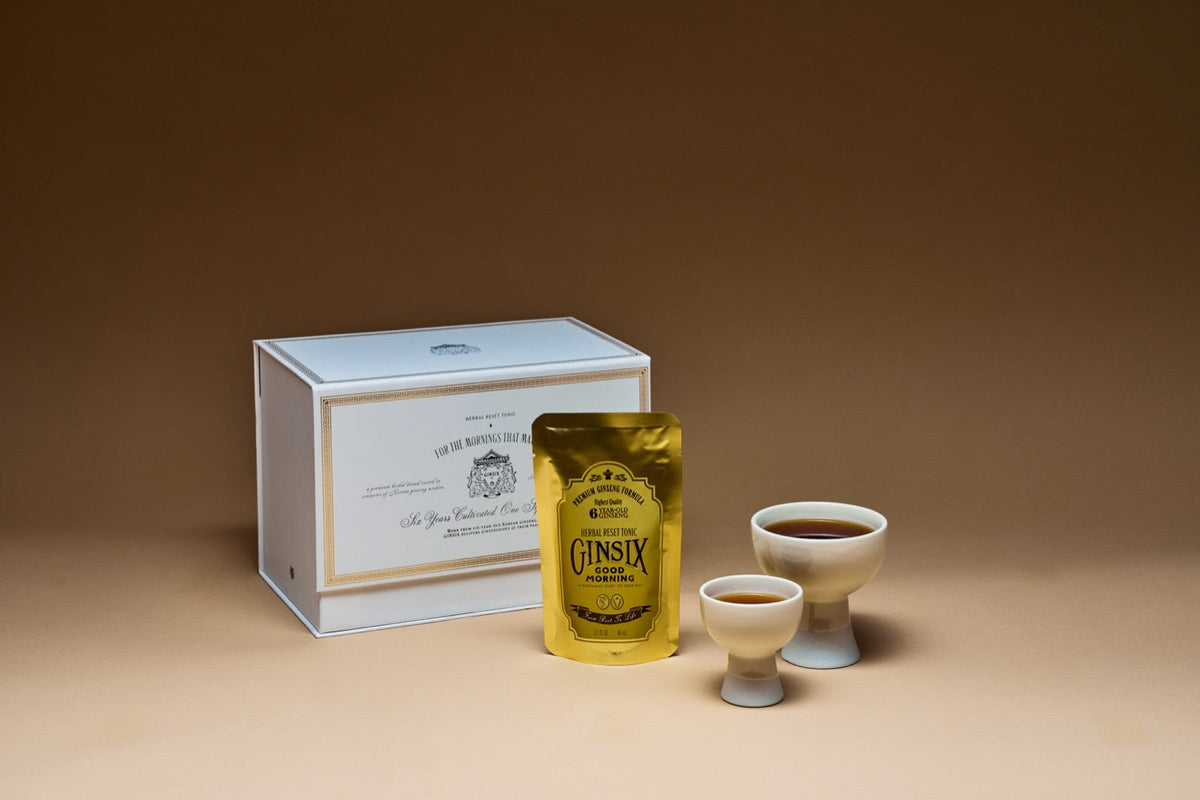
GINSIX Morning Ritual is an 80mL Korean herbal tonic, sold in 3-, 6- and 12-packs. More on the formulator on the About page.
GINSIX is a herbal tonic, not a medicine. It is not intended to diagnose, treat, cure or prevent any disease. If you are pregnant, nursing, taking prescription medication, or managing a health condition, speak to a clinician before adding any herbal product to your routine.