Article: Why Six-Year Ginseng Is Different
Why Six-Year Ginseng Is Different
Not all ginseng is grown the same way. Not all ginseng is harvested at the same time. Those two facts explain most of the gap between what is sold in the mass market and what Korean practitioners actually source.
The growth cycle of Panax ginseng
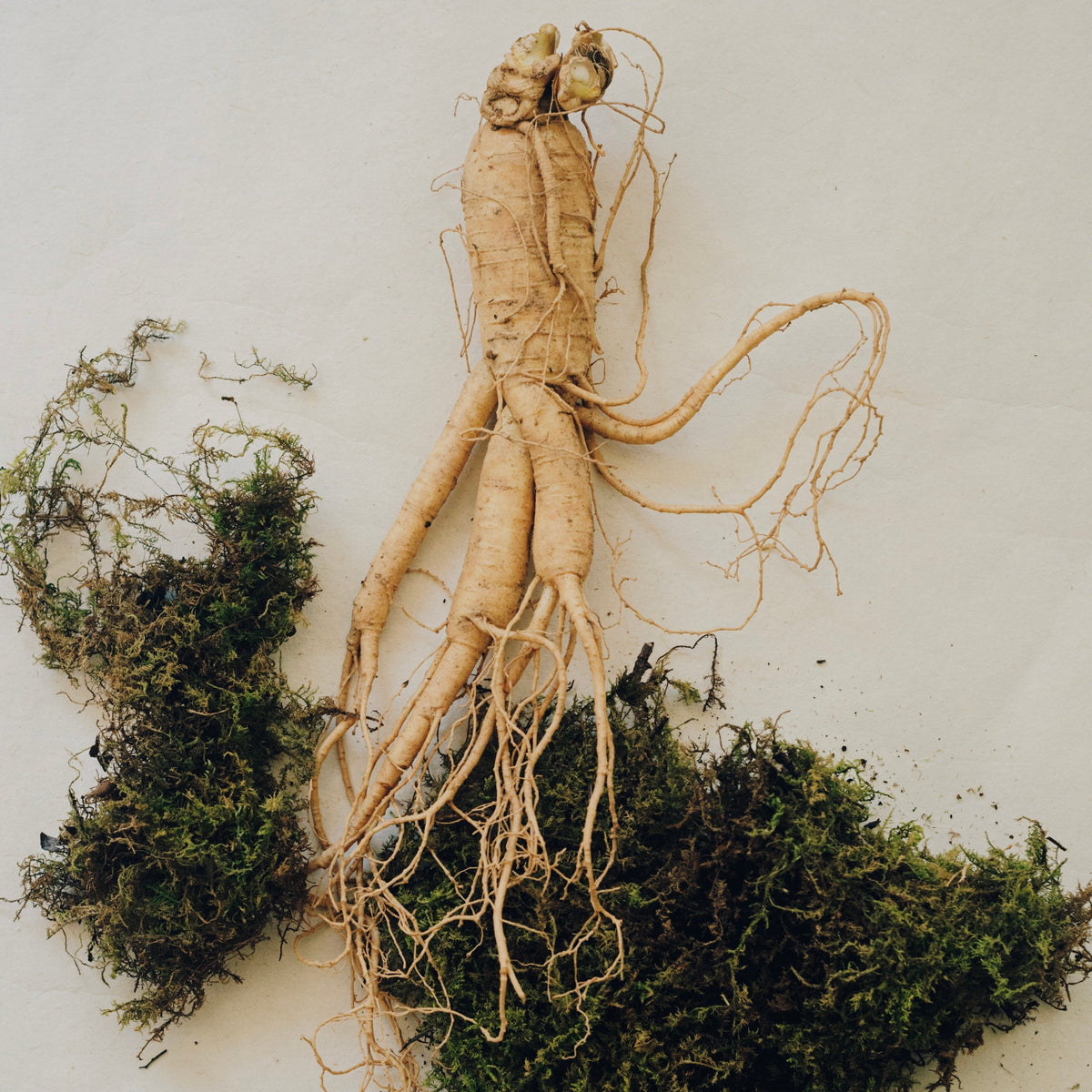
Panax ginseng is a slow plant. It does not produce meaningful root mass in its first year, or its second. The root spends its early years establishing itself in the soil, building structure, and beginning to synthesise the saponin compounds it is known for. By year three or four you have a viable root. By year six you have something categorically different.
The ginsenoside content of a six-year root is significantly higher than that of a two or three-year root. This is measurable chemistry, not marketing language. Work published in the Journal of Ginseng Research has documented the relationship between root age and ginsenoside concentration, with the six-year mark identified as the peak of ginsenoside development before the root begins to decline.
Six years is the standard in traditional Korean medicine for that reason. It is not a trend. It is the result of a very long period of observation.
Why most commercial ginseng is harvested early
The economics of early harvest are straightforward. A two or three-year root costs less to grow, turns over faster, and is difficult to distinguish from a six-year root once it has been processed into a powder or an extract.
Brands operating at scale, or sourcing from undifferentiated agricultural suppliers, rarely pay the premium for age-verified root. They may use the term "Korean ginseng" because Korea is the origin of supply. Origin of supply is not the same as age of harvest.
The buyer has no easy way to check. The label will not say "two-year root". It says "Korean ginseng root extract".
Why Ganghwa Island specifically
Ganghwa Island is a tidal island off the coast of Incheon and one of the historically significant ginseng-growing regions in Korea. The soil is mineral-dense, shaped by centuries of tidal deposition. The growing conditions, including temperature range, humidity and soil composition, produce roots with a high ginsenoside concentration relative to other regions.
Korean farmers and practitioners have recognised Ganghwa as a premium origin for generations. This is a function of terroir, the same reason wine from one valley differs from wine grown in different soil twenty kilometres away.
Dr. Chun sources from Ganghwa Island for this reason.
What this means for the product in your hand
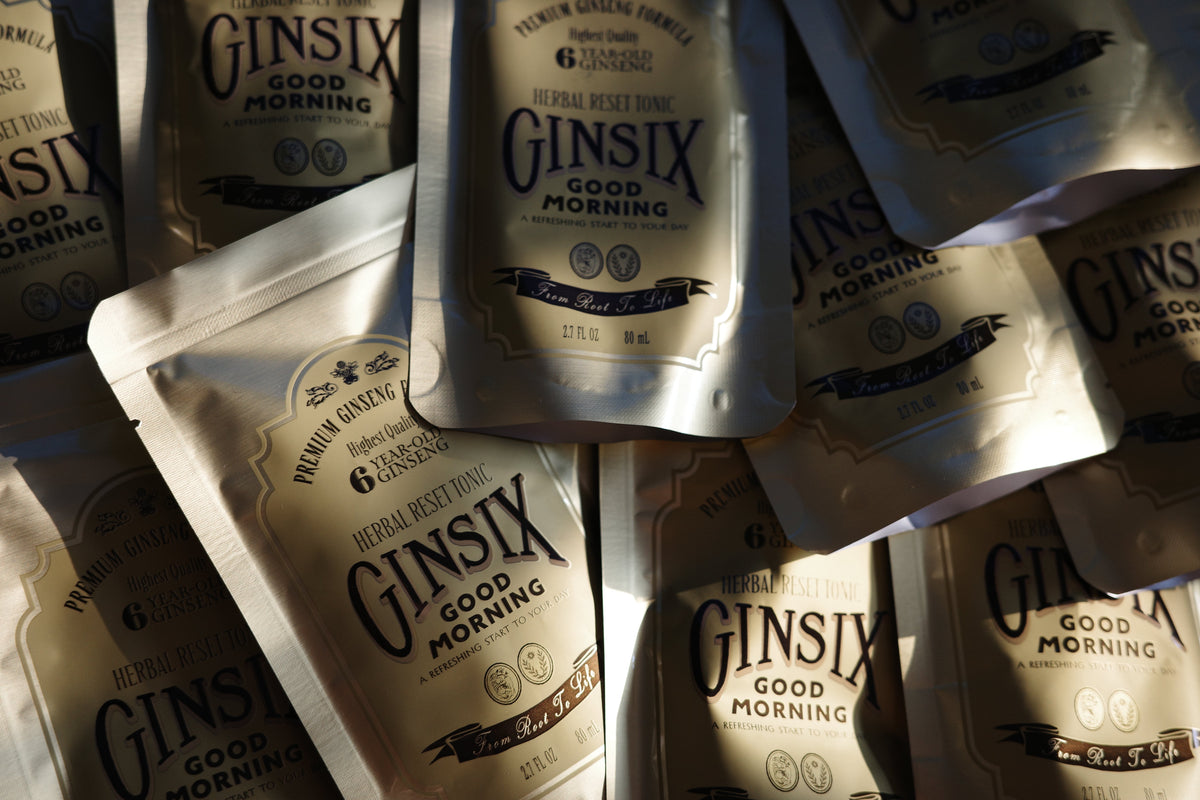
When GINSIX specifies six-year Ganghwa Island ginseng, that is a specific claim about root age and origin. It is a sourcing decision, and it is verifiable.
If a brand you are looking at cannot tell you the harvest age and the growing region, the product may still contain ginseng. It is not the same ginseng.
GINSIX Morning Ritual is an 80mL Korean herbal tonic, 3-, 6- and 12-packs. More on the formulator on the About page.
GINSIX is a herbal tonic, not a medicine. It is not intended to diagnose, treat, cure or prevent any disease. If you are pregnant, nursing, taking prescription medication, or managing a health condition, speak to a clinician before adding any herbal product to your routine.